Fiber Supplements vs Food: When the Powder Earns a Place
The fiber gap is real and the supplement aisle knows it — psyllium, gummies and powders promising the 30 grams your plate misses. The honest decoder: what supplements actually deliver, where they legitimately help and why food keeps the crown anyway.

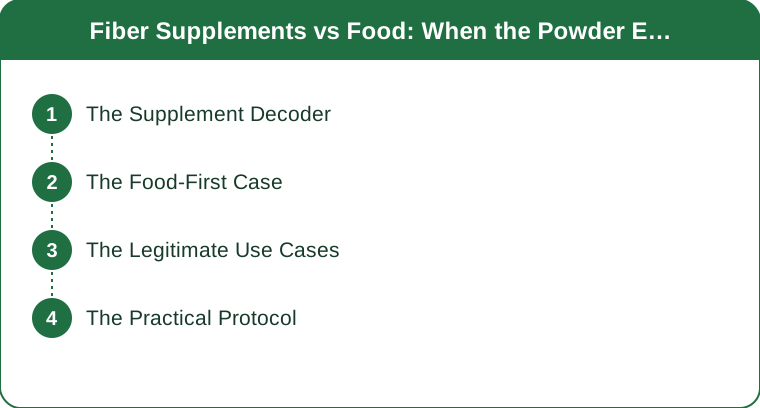
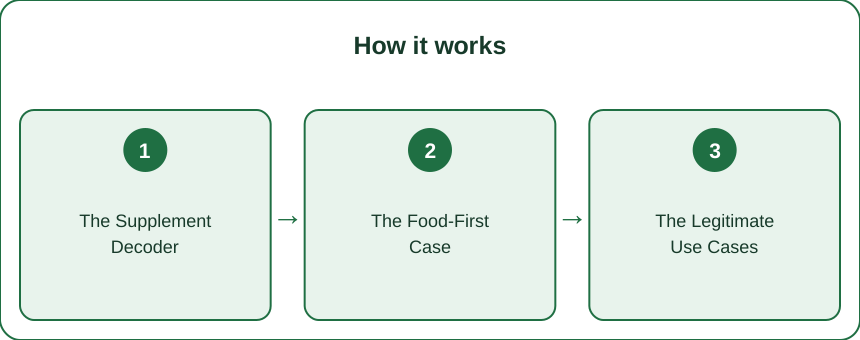
The Supplement Decoder
The aisle translated: psyllium husk leads (the most-studied fiber supplement — the soluble, gel-forming fiber with real evidence on cholesterol and regularity; the one the research respects), the methylcellulose-and-friends tier (gentler synthetic options for the psyllium-averse), the inulin-and-chicory powders (the prebiotic-marketing tier — ferments enthusiastically, which means the gas chapter applies at full volume; ramp or regret), the gummy honesty (fiber gummies deliver token grams with dessert sugar — the compliance format that mostly supplements the manufacturer), and the label math (the grams-per-serving check against the daily gap — the supplement covering 3g of a 15g gap is a rounding error with a subscription).
The Food-First Case
Why the plate keeps the crown: the package deal (food fiber arrives with the vitamins, minerals, polyphenols and PROTEIN the powder strips out — the beans-and-oats tier is fiber plus its entire entourage), the diversity argument (the microbiome wants VARIED fibers — the thirty-plants doctrine; the single-fiber supplement feeds a monoculture), the satiety difference (food fiber fills — the appetite-management benefit lives in chewing and volume; the stirred powder skips the mechanism), and the cost comparison (the oats-beans-vegetables route delivers the full gap at grocery prices — the supplement subscription funds a lot of lentils).

The Legitimate Use Cases
Where powder earns its place: the transition bridge (the supplement covering the gap WHILE food habits build — the scaffold, not the building; the taper written into the plan), the travel-and-chaos insurance (the routine-disrupting weeks where the plate goes beige — psyllium as the portable regularity floor), the specific-goal tier (the cholesterol-management psyllium protocol has real evidence — the doctor-conversation use case; the IBS-adjacent soluble-fiber strategies belong to professional guidance), the appetite-support experiment (the pre-meal psyllium-and-water trick — modest evidence, harmless trial), and the honest-limits clause (supplements don’t fix an ultra-processed pattern — the fiber powder stirred into a fiberless diet is a fig leaf with a scoop).
The Practical Protocol
Using either well: the universal ramp rule (fiber increases gradually from EVERY source — the doubled-overnight regret is format-agnostic), the water law (fiber works with fluid — supplements especially; the psyllium-without-water experience is memorable and once), the timing notes (supplements away from medications — the absorption-interference fine print worth a pharmacist minute), the measurement honesty (the goal is the daily 25-30g TOTAL — track a normal week once; most people find the gap is 10-15g, which two food swaps close), and the verdict (food first, psyllium as the evidence-backed understudy, gummies as candy with a health sticker). The gap is real — close it with groceries, bridge it with powder when life insists.
Psyllium is the real one, food carries the entourage, ramp and hydrate always, gummies are candy. Fiber supplements are understudies — legitimate on chaotic weeks, never the lead.
Keep Reading
This article is for general informational purposes only and is not medical advice. Always consult a qualified health professional for guidance specific to you.