How Fiber Needs Actually Change During Pregnancy (And Why More People Fall Short)
Quick Answer: Fiber needs increase modestly during pregnancy, and adequate intake becomes especially important because pregnancy hormones and iron supplementation commonly slow digestion and contribute to constipation — most guidelines suggest aiming for roughly 25-30 grams of fiber daily during pregnancy, increased gradually and paired with adequate water intake.
Pregnancy constipation is common enough to be treated as a footnote, but fiber intake is one of the more effective, low-risk ways to actually address it.

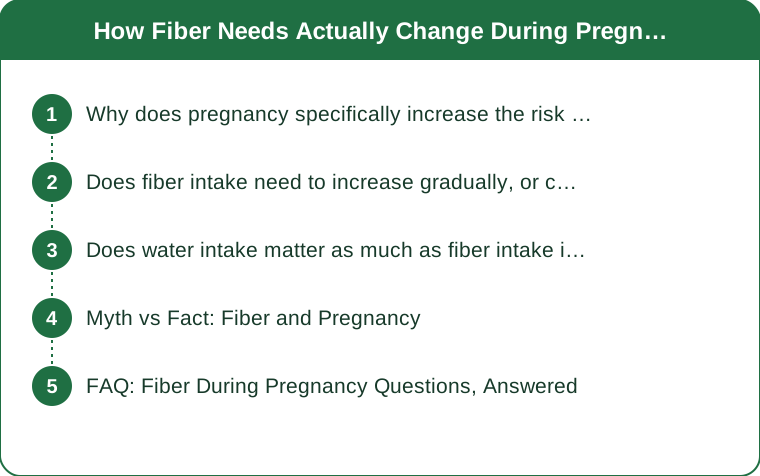
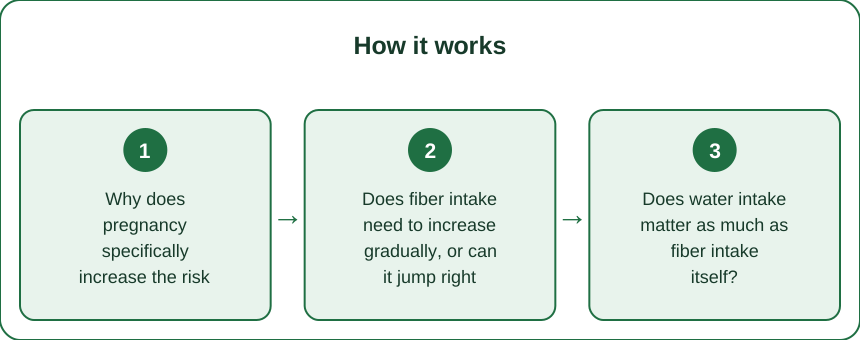
Why does pregnancy specifically increase the risk of falling short on fiber?
Rising progesterone levels slow digestive motility, and iron supplements commonly recommended during pregnancy are known to contribute to constipation — both factors make adequate fiber intake more important during pregnancy than in a typical non-pregnant state, even though the recommended gram increase itself is relatively modest.
Does fiber intake need to increase gradually, or can it jump right away?
Gradual increases are generally recommended, regardless of pregnancy status, since a sudden large jump in fiber can cause bloating and gas — this matters especially during pregnancy when digestive comfort is often already compromised by hormonal changes and a growing uterus.

Does water intake matter as much as fiber intake itself?
Yes, arguably as much or more. Fiber without adequate water intake can worsen constipation rather than relieve it, since fiber works partly by absorbing water to add bulk to stool — increasing fiber without also increasing water intake is a common mistake that undermines the intended benefit.
Myth vs Fact: Fiber and Pregnancy
Myth: pregnancy dramatically increases fiber needs. Fact: the increase is real but modest — the bigger issue is that pregnancy symptoms make it easier to fall short of even normal fiber targets. Myth: fiber supplements are the best way to close the gap. Fact: whole food sources (fruits, vegetables, whole grains, legumes) provide fiber alongside other pregnancy-relevant nutrients that isolated supplements don’t replicate.
FAQ: Fiber During Pregnancy Questions, Answered
Is it safe to take a fiber supplement during pregnancy if food sources aren’t enough?
Many fiber supplements are considered safe during pregnancy, but checking with a doctor or midwife before starting any new supplement during pregnancy is the recommended approach. This is general information, not medical advice.
Does fiber intake affect anything besides constipation during pregnancy?
Adequate fiber intake is also associated with better blood sugar regulation, which is relevant given the increased risk of gestational diabetes during pregnancy, though fiber alone isn’t a substitute for full prenatal nutritional guidance.
What are practical, easy ways to add fiber during pregnancy when nausea limits food variety?
Simple additions like a small handful of berries, a slice of whole-grain toast, or a spoonful of ground flaxseed in something already tolerated can add fiber without requiring major dietary changes during difficult symptom periods.
TL;DR:
- Fiber needs increase modestly during pregnancy, to roughly 25-30 grams daily
- Hormonal changes and iron supplementation make constipation more common, raising fiber’s importance
- Increase fiber gradually and pair it with adequate water intake
- Whole food sources provide additional pregnancy-relevant nutrients supplements don’t replicate
This is general information, not medical advice — check with your doctor or midwife about fiber and supplement choices specific to your pregnancy.
Keep Reading
This article is for general informational purposes only and is not medical advice. Always consult a qualified health professional for guidance specific to you.