Why More Fiber Gives You Gas (and Exactly How Long It Lasts)
Quick Answer: Gas and bloating from a fiber increase typically peak in the first 3–5 days and settle within 2–3 weeks as your gut bacteria adjust. Increasing fiber by more than 5 grams per week, without enough water, is the main reason it lasts longer or feels worse than it needs to.
You did everything right — added beans, oats, more vegetables — and now you’re bloated and gassy by 2pm every day. This isn’t your body rejecting fiber. It’s your gut bacteria population shifting to handle a food source they weren’t getting much of before.

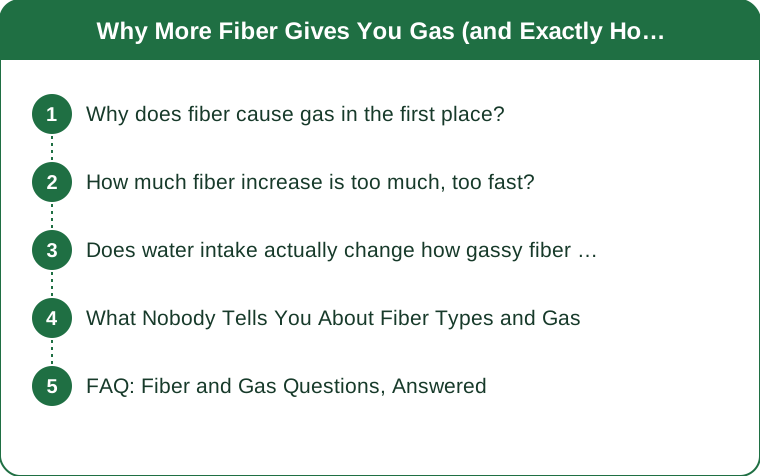
Why does fiber cause gas in the first place?
Fiber isn’t digested by your stomach or small intestine — it travels to your colon, where bacteria ferment it, and gas is a natural byproduct of that fermentation. A sudden jump in fiber means a sudden jump in fermentable material, and your existing bacterial population isn’t sized to handle it yet.
Over roughly 2–3 weeks of consistent intake, the bacteria that specifically break down fiber multiply to match the new supply, and gas production drops back down even though your fiber intake stays high.
How much fiber increase is too much, too fast?
A jump of more than about 5 grams per day, week over week, is where most people start noticing real discomfort — for context, that’s roughly the difference between a slice of white toast and a cup of black beans. Going from 15g to 35g in a single week is a common overcorrection after reading a “get more fiber” headline.
Instead, add one high-fiber food every 3–4 days and let your gut catch up before the next addition.

Does water intake actually change how gassy fiber feels?
Yes — fiber (especially the insoluble type) absorbs water as it moves through your gut. Without enough fluid, it can sit longer and ferment more intensely, which means more gas and more bloating, not less fiber-related discomfort.
A rough target is an extra 8 oz of water for every 5g of fiber you add, sipped through the day rather than all at once.
What Nobody Tells You About Fiber Types and Gas
Soluble fiber (oats, beans, apples) ferments more actively and tends to cause more gas early on, but it’s also gentler on transit time. Insoluble fiber (wheat bran, vegetable skins) ferments less but adds bulk faster, which can cause cramping if you increase it too quickly without water.
Most people do better introducing soluble fiber first, since the fermentation-related gas fades faster than the bulk-related discomfort from too much insoluble fiber too soon — the opposite of what most “just eat more bran” advice suggests.
FAQ: Fiber and Gas Questions, Answered
Is it normal to have bloating every single day after adding fiber?
Some bloating in the first 1–2 weeks is normal, but daily bloating past week 3 is worth mentioning to a doctor — it could signal an intolerance or an unrelated digestive issue rather than a normal adjustment.
Do probiotics help with fiber-related gas?
They can, since they add more bacteria capable of processing fiber, but they’re not a substitute for pacing your intake — probiotics work best alongside a gradual increase, not instead of one.
Should you stop increasing fiber if you get bloated?
No, in most cases slowing the pace (not stopping) resolves it faster, since stopping and restarting later just repeats the adjustment period. This is general information, not medical advice — persistent pain warrants a doctor’s input.
TL;DR:
- Gas comes from gut bacteria fermenting fiber, not intolerance — it’s a temporary adjustment
- Add fiber gradually: no more than ~5g/day increase per week
- Match extra fiber with extra water, roughly 8 oz per 5g added
- Soluble fiber first is usually gentler than loading up on insoluble fiber and bran
Give your gut the 2–3 week adjustment window it actually needs, and the same fiber that bloated you in week one usually stops registering at all by week three.
Keep Reading
This article is for general informational purposes only and is not medical advice. Always consult a qualified health professional for guidance specific to you.