How to Add More Fiber Without the Bloating and Gas
You heard fiber’s the most underrated nutrient, doubled your intake overnight, and now you’re bloated, gassy and miserable — and ready to quit. The problem wasn’t the fiber; it was the speed. The guide: why the transition causes trouble, the go-slow-and-smart method and the which-fibers-and-hydration details that keep you comfortable.

The Fiber-Transition Problem
Why more fiber backfires at first: the too-much-too-fast reality (the sudden-fiber-increase overwhelming the gut — the the-speed-problem; the the-not-the-fiber’s-fault; the the-most-underrated-nutrient chapter’s caveat), the the-gut-adjustment (the gut-bacteria needing time-to-adapt — the the-microbiome-adjustment; the the-gradual-is-key), the the-bloating-and-gas mechanism (the fiber-fermentation producing-gas during-adjustment — the the-why-it-happens; the the-temporary-discomfort), the the-quit-too-soon risk (the discomfort-driving-people-to-quit before-adapting — the the-give-up-trap; the the-push-through-gently), the the-hydration-factor (the fiber-needs-water, and its-absence causing-trouble — the the-water-connection; the the-common-miss), and the reframe (the fiber-transition as a go-slow-and-hydrate problem, not-a-fiber-problem — the the-transition-matters; the the-comfortable-approach).

The Go-Slow-and-Smart Method
Adding fiber comfortably: the the-increase-gradually rule (the slowly-ramp-fiber over weeks — the the-gradual-increase; the the-let-the-gut-adapt; the the-key-fix), the the-small-steps (the add-a-little-at-a-time — the the-incremental; the the-not-all-at-once), the the-spread-through-the-day (the fiber-across-meals not-all-at-once — the the-distribute; the the-ease-the-load), the the-hydrate-alongside (the water-with-the-fiber — the the-crucial-hydration; the the-fiber-needs-water; the the-hydration chapter’s partner), the the-cook-some-veg (the cooked-veg easier-than-raw during-transition — the the-gentler-fiber; the the-cooked-eases-it), the the-listen-to-your-gut (the adjust-the-pace to your-tolerance — the the-responsive; the the-your-pace), the the-consistency-helps (the regular-fiber steadying-the-gut over time — the the-adaptation; the the-it-gets-better), and the the-patience (the gut-adapts-over-weeks — the the-give-it-time; the the-transition-passes).
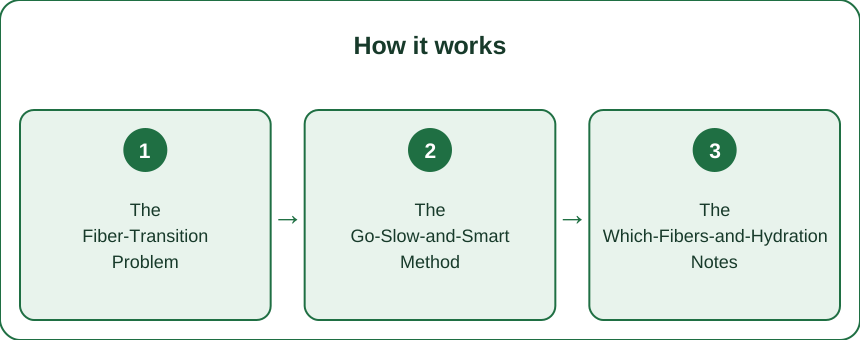
The Which-Fibers-and-Hydration Notes
The details that help: the the-soluble-vs-insoluble (the different-fiber-types and their-effects — the the-fiber-types; the the-variety-helps), the the-food-first (the whole-food-fiber over supplements from the fiber-supplements-vs-food chapter — the the-food-fiber; the the-real-food), the the-variety-of-sources (the beans, oats, fruit, veg and whole-grains from the beans-daily chapter — the the-diverse-fiber; the the-mix-it-up), the the-beans-go-gradual (the beans’-gas-managed by gradual-intro and prep — the the-bean-tips; the the-rinse-and-ramp), the the-hydration-is-non-negotiable (the water-makes-fiber-work — the the-water-partner; the the-drink-up; the without-it-constipation), the the-supplement-if-needed (the fiber-supplement to fill-gaps, gradually from the supplements chapter — the the-supplement-carefully; the the-food-first-still), the the-move-too (the movement-aids-digestion — the the-movement-helps; the the-walk-it-out), and the frame (more fiber without the misery through understanding-the-transition, go-slow-and-smart and which-fibers-and-hydration — the gradual-increase and adequate-water that keep you comfortable; the fiber, added painlessly). Increase gradually, spread it out, hydrate alongside, and be patient: the fiber, added without bloating.
You doubled your fiber overnight and now you’re bloated and miserable — the problem was the speed, not the fiber. Your gut needs time to adapt. Increase gradually over weeks, spread fiber across meals, and (crucially) drink more water — fiber needs it to work. Favor whole-food fiber from varied sources, introduce beans slowly, cook some veg during the transition, and be patient. The discomfort passes as your gut adapts.
Keep Reading
This article is for general informational purposes only and is not medical advice. Always consult a qualified health professional for guidance specific to you.